
Introduction
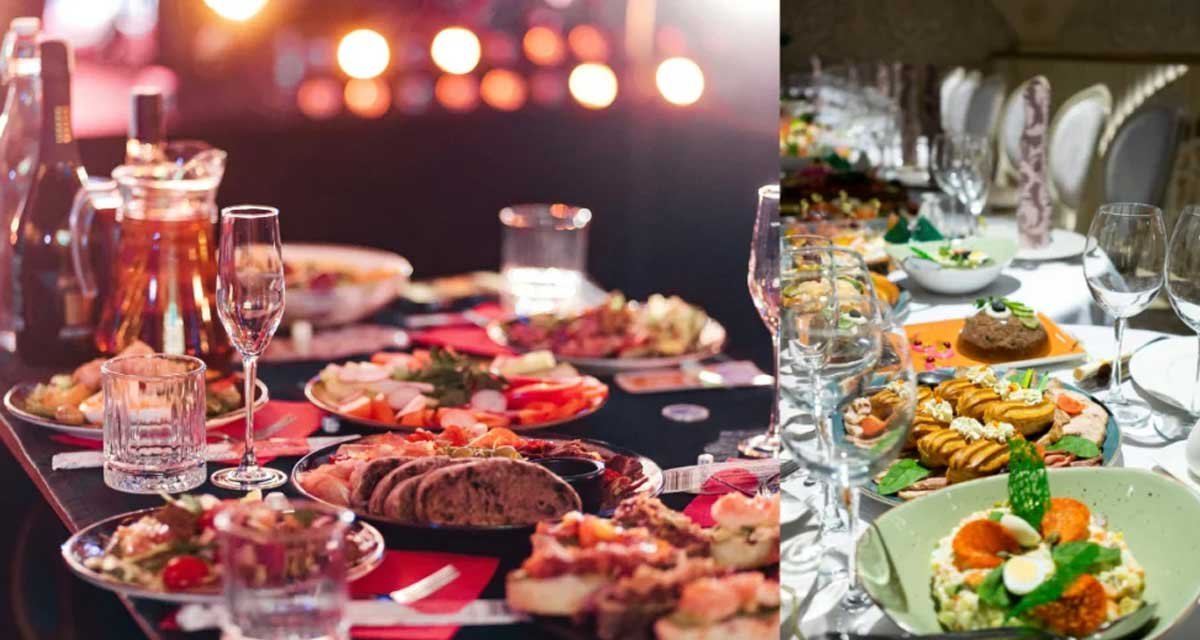
A party food station is a designated serving area that organizes food, drinks, and utensils so guests can serve themselves efficiently.
At large celebrations, food stations act less like simple tables and more like traffic systems that either keep the event flowing or create unnecessary stress for hosts and guests alike.
Crowding, long lines, and constant refilling are standard when food service is not planned with scale in mind.
Event planning studies consistently show that congestion around food areas is one of the most significant contributors to guest dissatisfaction at large gatherings.
A stress-free food station is built around movement, clarity, and preparation.
In this guide, you will learn how to design layouts, choose station types, select reliable equipment, avoid common mistakes, and keep food service running smoothly during large indoor, outdoor, and mobile celebrations.
What Makes a Party Food Station “Stress-Free”?
A stress-free party food station minimizes friction for guests and the host’s workload.
Guests should immediately understand where to start, what to take, and where to move next without stopping to ask questions or blocking others.
Three elements define a low-stress setup.
Flow controls how people move through the station.
Clarity ensures food choices and utensils are evident at a glance.
Maintenance planning allows fast refills and quick cleanup without disrupting service.
When these elements work together, problems such as utensil shortages, spills, confusion about allergens, and overcrowding are dramatically reduced.
Instead of managing constant issues, the host oversees a system that runs itself.
How Many Food Stations Do You Need for a Large Celebration?
Most large celebrations require more than one food access point once the guest count exceeds 40-60 people.
For events with 75 to 120 guests, two stations or one extended station with multiple entry points usually prevent long lines.
Celebrations with 150 guests or more typically benefit from three stations or a distributed layout across the venue.
Menu complexity also plays a role, because build-your-own meals take longer per guest than grab-and-go options.
The safest planning approach is to design for peak demand rather than average demand.
Food stations are busiest during the first hour after opening, so capacity should be sized for that initial surge.
How Do You Plan the Layout of a Party Food Station Area?
Effective layout planning follows six steps that reduce congestion and confusion.
- Position the station away from entrances and main walkways.
- Establish a clear entry and exit path.
- Arrange items in serving order, starting with plates and ending with utensils.
- Separate drinks from food to prevent overlapping lines.
- Leave space beside or behind the station for refills.
- Use simple labels to speed up guest decisions.
A well-designed layout turns serving into a smooth, seamless process rather than a bottleneck.
Small changes, such as duplicating plates or moving sauces to the end, often eliminate lines instantly.
What Is Guest Flow and Why Is It Critical for Food Stations?
Guest flow is the predictable movement pattern of people through a serving area.
In food stations, flow determines whether guests pass through easily or collide and stall.
Poor flow forces guests to stop or backtrack while holding plates.
Good flow keeps movement forward and prevents crowd buildup.
If popular items cause guests to pause mid-line, the issue is usually layout rather than menu choice.
Duplicating high-demand items or spacing them apart often resolves the problem quickly.
Where Should You Position Food Stations in a Large Venue?
Food stations work best along perimeter walls or open edges with room for lines to expand.
This keeps food traffic from cutting through social or seating areas.
Avoid placing stations directly at entrances.
Outdoors, choose shaded locations protected from wind and close to power or ice access.
Good positioning gives the station a clear serving face and a discreet refill side, keeping service unobtrusive.
What Types of Party Food Stations Work Best for Large Events?
Party food stations fall into three main categories: buffet-style, self-serve snack, and themed or interactive.
Each type solves different crowd and timing challenges.
Buffets handle volume efficiently.
Snack stations spread demand over time.
Themed stations create structure and distribute traffic across the venue.
Large celebrations often benefit from combining station types to prevent all guests from gathering in one place at once.
Buffet-Style Food Stations
A buffet-style food station is a linear serving setup where guests build full plates.
Buffets work best when menu items are familiar and easy to portion consistently.
Spacing popular items apart and duplicating essentials like plates and napkins keeps lines moving.
Temperature control is critical, and backup trays should be staged so they can be swapped quickly during peak demand.
Self-Serve Snack and Appetizer Stations
Self-serve snack stations allow guests to graze without creating a rush.
They work best for finger foods and small portions that do not require utensils.
Pre-portioned servings reduce waste and speed up movement.
Snack stations also integrate well into social areas, allowing guests to eat without leaving their conversations.
Themed or Interactive Food Stations
Themed food stations center around a specific concept, such as tacos, desserts, or bowls.
They reduce stress by limiting choices and creating an intuitive serving order.
These stations act as destinations, drawing guests away from main buffets and balancing traffic.
They also elevate the experience without adding operational complexity.
What Equipment Do You Need for a Large Party Food Station Setup?
Food station equipment supports serving efficiency, stability, and temperature control under heavy use.
The right equipment prevents small failures that quickly escalate during significant events.
A solid prep and staging surface is essential.
Using a stainless steel work table provides a durable, easy-to-clean foundation for portioning, refilling, and handling heavy trays without wobble or surface damage.
Key equipment categories include:
- Serving and display equipment
- Food holding and temperature control
- Cleanup and waste management
- Labeling and guidance tools
Covering these categories creates predictability and control during peak service periods.
Serving Equipment and Display Essentials
Serving equipment presents food clearly and keeps guests moving.
Stable trays, visible labels, and adequately sized utensils prevent hesitation and mess.
Core essentials include trays sized for fast swaps, portion tools matched to food type, risers for visibility, dispensers for sauces, and clear allergen labels.
When serving tools are intuitive, guests make faster decisions, and lines move naturally.
Food Holding and Temperature Control Equipment
Food-holding equipment keeps hot foods hot and cold foods cold without degrading their quality.
The most common failure is leaving food exposed too long while guests browse.
Chafing dishes, insulated backups, ice baths, and planned swap refills maintain food safety and texture.
Replacing trays instead of topping them off is faster, cleaner, and more reliable during peak service.
What Are the Main Benefits of Using Organized Food Stations for Large Celebrations?
Organized food stations reduce chaos and improve guest experience.
There are six primary benefits.
- Reduce wait times through better distribution
- Improve cleanliness with controlled serving zones
- Increase food safety through proper holding
- Lower host workload with predictable refills
- Improve guest confidence with clear labeling
- Reduce waste through portion control
When stations are designed as systems, hosting becomes noticeably easier.
What Are the Common Mistakes That Make Party Food Stations Stressful?
Stressful stations usually fail due to congestion and poor sequencing.
Seven mistakes appear most often.
- Creating a single narrow entry point
- Placing plates or utensils at the end
- Clustering high-demand items together
- Skipping labels and allergen markers
- Using open bowls for sauces
- Forgetting a refill lane
- Mixing drinks and food service
Most of these issues can be fixed with simple layout adjustments rather than adding more food or equipment.
How Much Does It Cost to Set Up a Party Food Station for a Large Event?
Costs typically range from $150–$500 for basic setups, $600–$1,500 for mid-range setups, and $2,000+ for premium or repeat-use systems.
Six factors drive pricing.
- Guest count
- Menu complexity
- Temperature control needs
- Service style
- Rental versus purchase decisions
- Venue constraints
Clear menus and efficient layouts often outperform expensive setups that lack structure.
How Do You Keep a Party Food Station Running Smoothly During the Event?
Smooth operation depends on preparation and rhythm.
Six steps keep stations stable during service.
- Stage backup supplies nearby
- Check stations every 15–20 minutes
- Swap trays instead of topping off
- Wipe high-contact areas continuously
- Replace missing utensils early
- Empty trash before bins overflow
Treating the station like light operations work prevents last-minute stress.
How Can You Adapt Food Stations for Outdoor or Mobile Celebrations?
Outdoor and mobile food stations succeed by controlling the environment and stability.
Wind, sun, and uneven surfaces are the main challenges.
Covered containers, weighted surfaces, compact equipment, and staged cold storage reduce risk.
Separating stations into zones limits disruption if conditions change.
For custom or repeatable setups, structural components such as metal frames, guards, and supports are often fabricated using press brake machines.
Systems like ACCURL CNC press brakes are commonly used in fabrication environments where consistent bends and durable structures are required for food service equipment and fixtures.
Preparation, not perfection, keeps outdoor service predictable.
Conclusion: How a Well-Designed Food Station Transforms Large Celebrations
A party food station is a structured serving system that shapes how guests move and interact with food.
When designed for flow, clarity, and maintenance, it removes the friction that makes significant events exhausting.
Simple choices like duplicating high-demand items, separating drinks, labeling clearly, and staging refills create outsized improvements.
When the station works as intended, you stop managing food and start enjoying the celebration.




Leave a Reply