Cream blush, done properly
How to Apply Cream Blush So It Is Still There at Five O’Clock
It fades by mid-afternoon because it never fully dries. The fix is a second texture, not a stronger cream: crème first, matched powder to lock it.
- Why it disappears by 2 p.m.
- The crème-then-powder lock
- Fingers vs brush vs sponge
Cream blush fades by mid-afternoon because it is an emollient sitting on top of your foundation, and anything that moves oil moves it: sebum, a phone against your cheek, the sleeve you wipe across your face. The fix is not a longer-wearing cream. It is a second texture pressed over the first, which is why professional artists apply crème first and lock it with powder in the same shade.
Everything below follows from that one idea. It covers why the fade happens, the layering method that stops it, which tool actually works, how to keep blush from fighting your contour, and what changes on mature skin.
Why Cream Blush Disappears by Afternoon
A cream blush is pigment suspended in oils, waxes, and esters. That base is what gives it the skin-like sheen powder cannot fake, and it is also why the color does not stay put: an emollient never fully dries, so it remains movable for as long as it is on your face.
Three things move it. Your own sebum thins the layer from underneath, so by early afternoon the pigment has spread out and reads as nothing. Touch drags it, and most people touch their cheeks dozens of times a day without noticing. And foundation that has not finished setting is still slippery, so the blush slides on it instead of gripping.
The other failure is patchiness rather than fading. Cream applied over powder grabs the powder unevenly and sits in clumps, and cream pressed onto a dry, textured patch of skin does the same. Both look like the product’s fault. Neither is.
The Two-Texture Method: Crème First, Powder to Lock
Powder blush on its own lasts but looks flat, and cream on its own looks like skin but does not last, so the answer artists settled on is to use both: crème for the finish, a light pass of powder in the same shade over the top to set it in place.
The powder does two jobs at once. It absorbs the surface oil that would otherwise carry the pigment away, and it gives the cream something to bond to, so touching your face later smudges powder rather than lifting the color underneath. The result reads as a single flush that is still there when you take your makeup off, which is the difference between a birthday photoshoot that holds up in every frame and one where the first ten shots are the only good ones.
Shade matching is the part people get wrong. A crème in one pink and a powder in another do not merge; they read as two blushes stacked, with a visible edge where the powder stops. The two layers need to be the same color family, which in practice means buying them as a pair.
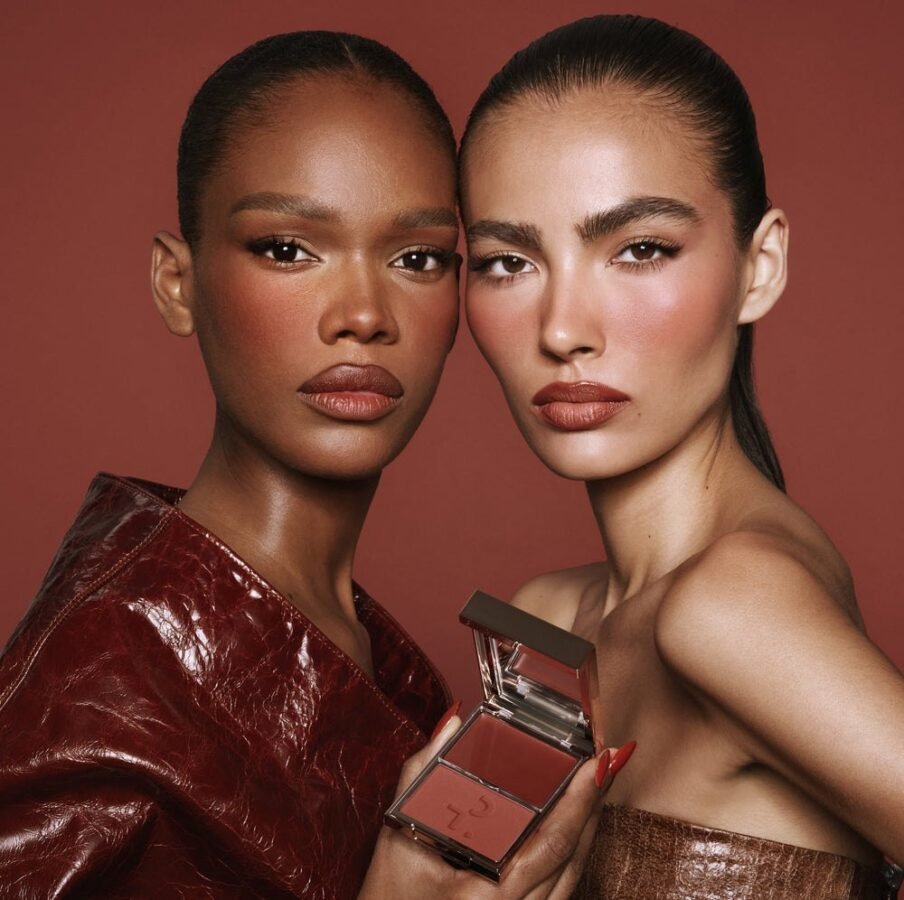
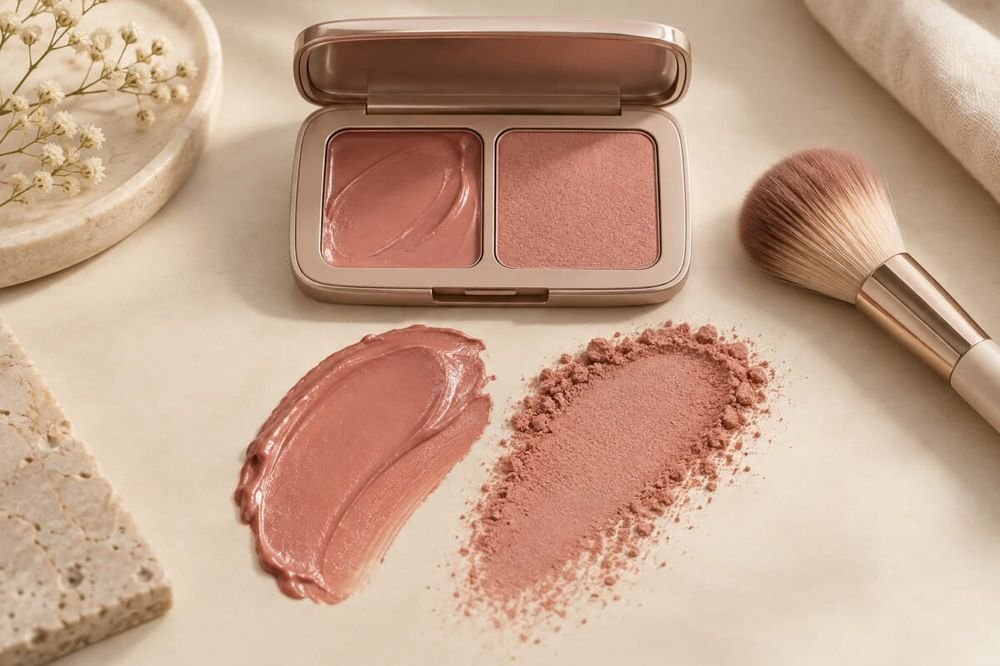
That is the reasoning behind Patrick Ta’s Major Headlines Double-Take, a compact holding a crème and a powder of the same shade. The brand describes it as “two formulas in one,” with the crème side delivering “natural radiance” and the powder side “a soft matte finish,” and calls the layered result its “signature long-lasting glow.” The range runs to 21 shades, which matters here because a shade family that exists as a matched pair is the whole point.
 Shop the Blush Duo
 The Ninety-Second Sequence: Base, Crème, Lock
Knowing how to apply cream blush comes down to a sequence rather than a technique, and the sequence is what matters: base set, crème placed and pressed, powder locked. The whole thing takes about ninety seconds once it is familiar.
1. Let your base set. Give liquid foundation sixty to ninety seconds before touching it, and do not powder the cheeks first. Powder under cream is the single most common cause of patchiness.
2. Warm the product. Swipe a little onto the back of your hand and let body heat soften it for a few seconds. Cold cream drags; warmed cream glides and sheers out evenly.
3. Place it high. Start on the top of the cheekbone, roughly level with the outer corner of the eye, and work upward toward the temple. Placing cream blush on the lower apple pulls the face down and is where it migrates fastest.
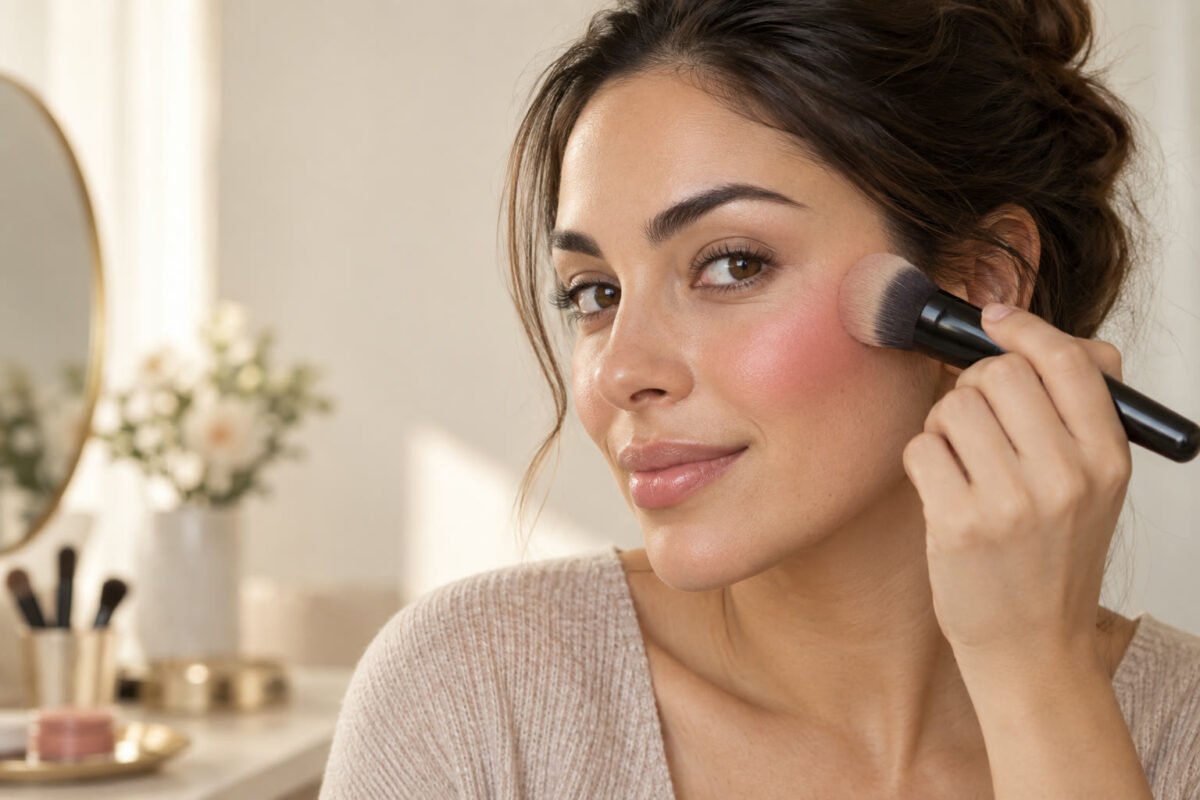
4. Press, never drag. Stamp the color on and blend the edges with small pressing motions. Dragging a brush or finger across wet foundation lifts it, which is what people mean when they say cream blush rubbed off their base.
5. Lock it with powder. With a fluffy brush, dust the matching powder over the crème using almost no pressure, just enough to set the surface. Heavy powder here undoes the skin-like finish you applied the cream for.
6. Set only if you need to. A setting spray adds hours on oily skin and is unnecessary on dry skin, where it can dull the finish.
 Shop the Brush
 Fingers, Brush, or Sponge?
Fingers work for a sheer wash and are the easiest place to start, but they are the reason most cream blush ends up patchy: the oils on your skin thin the product unevenly, and finger pressure is impossible to keep consistent across the cheek.
A sponge is worse. It absorbs cream into itself, so you use twice the product for half the color, and the damp surface pulls foundation up with every press.
A brush is the right tool, but it has to be the right brush, and the two-texture method needs two different heads. Cream wants a dense, flat-topped brush that can stamp and press without absorbing. Powder wants a fluffy, loosely packed brush that diffuses rather than deposits. Using the fluffy one for cream leaves streaks; using the dense one for powder leaves a hard edge.
Patrick Ta’s Dual-Ended Blush Brush is built for exactly that split. The brand’s own description is the clearest summary: “the fluffy end is great for lightly diffusing color, while the dense end is good for cream blushes.” One tool, one end per texture, no washing a brush between the two steps.
Keeping Blush and Contour From Fighting
The layering method solves fading, and then introduces a new problem for anyone who also contours: two products in the same zone, and if their textures are mismatched, they smear into each other.
The usual failure is powder contour first, then cream blush over it. The cream grabs the powder and the edge between them goes muddy. The reverse is nearly as bad: cream contour, cream blush, and now two emollient layers slide over each other with nothing anchoring either.
The rule is the same texture logic applied to both. Crème contour goes on first, stamped just under the cheekbone and blended upward. Crème blush goes on above it. Then both powders, contour first and blush second, set each layer in its own place, and the two products stop moving.
That is why the contour counterpart to the blush duo exists in the same format. Patrick Ta’s Major Sculpt Crème Contour and Powder Bronzer Duo pairs “a luminous cream and powder in complementary shades,” in the brand’s words, where “the lighter, cream shade shapes and defines while talc-free powder finishes with a hint of warmth.” The brand’s application note is to apply the cream “with a gentle, stamping motion,” which is the same press-don’t-drag rule that keeps the blush intact.
Cream Blush on Mature Skin
Cream is the better choice on mature skin, and the reasons are the same properties that make it fade. It does not settle into fine lines the way powder does, and it puts back the surface sheen that skin loses with age.
Two adjustments matter. The powder lock must be nearly weightless and satin or soft-matte rather than fully matte, because a heavy matte powder over cream on mature skin reads as dry. And placement should sit higher on the cheekbone than it did at thirty, since anything on the lower apple now reads as drag.
Undertone does more work than depth. Rosy taupes, soft mauves, and warm rosy beiges tend to sit more naturally on skin that has lost some of its own color than bright pinks do, and the shade names in a range like Major Headlines are legible enough to find those without swatching every one.
Common Cream Blush Mistakes
Most cream blush complaints trace to five habits.
Applying over powder, which causes patchiness on contact. Using too much, because cream sheers as it warms and looks lighter in the compact than on the face. Dragging instead of pressing, which lifts foundation. Setting with a heavy hand of powder, which flattens the finish and erases the reason you chose cream. And skipping the powder lock entirely and then touching your face all day.
The layering method removes four of the five. The fifth, too much product, is solved by warming a small amount on your hand first and building in thin passes.
The Three Products This Method Assumes
Disclosure: the product links below are affiliate links to Patrick Ta Beauty. If you buy through them, this site earns a commission at no extra cost to you. Product descriptions are the manufacturer’s own claims.
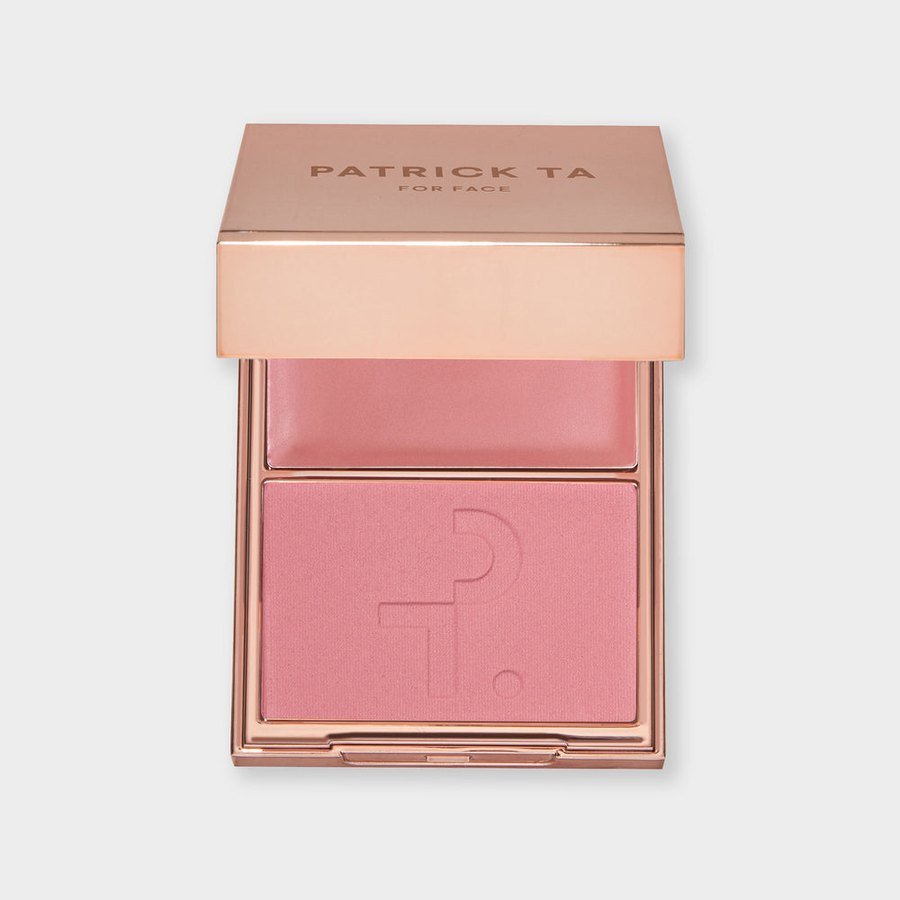
Major Headlines Double-Take Crème & Powder Blush Duo
The matched crème and powder pair the layering method is built on. One shade, two textures, one compact; 21 shades listed. $40.
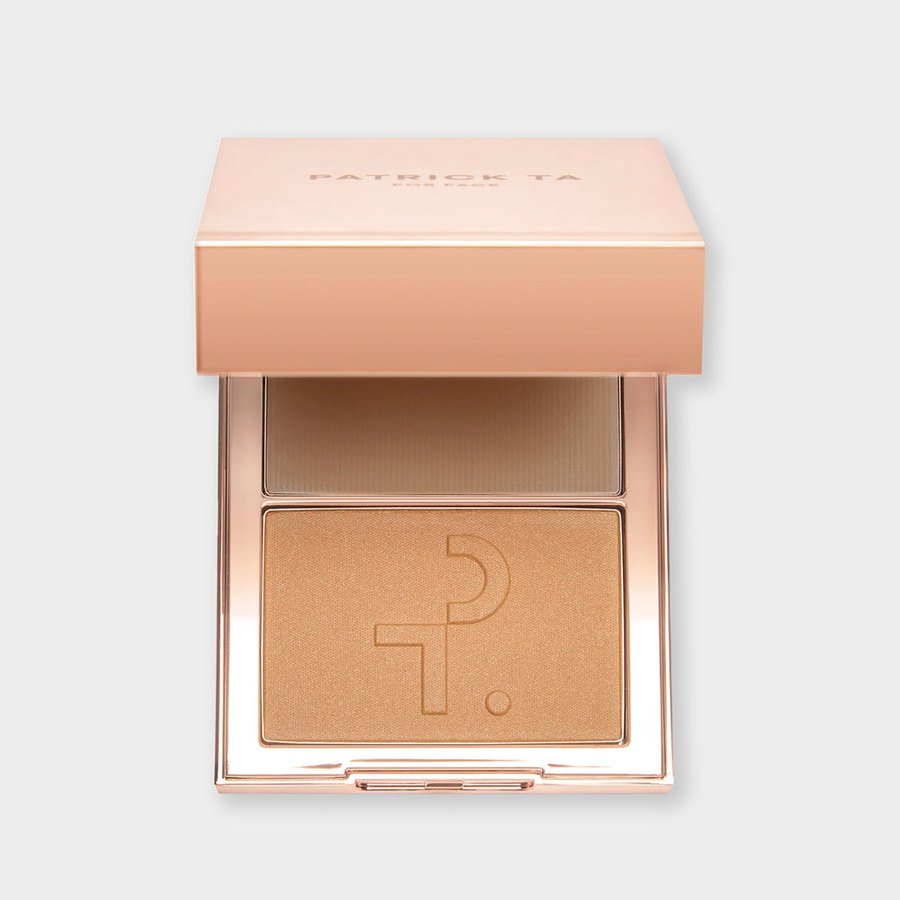
Major Sculpt Crème Contour & Powder Bronzer Duo
The same two-texture format for contour, so the sculpt layer sets in place instead of smearing into the blush. Five shades. $42.
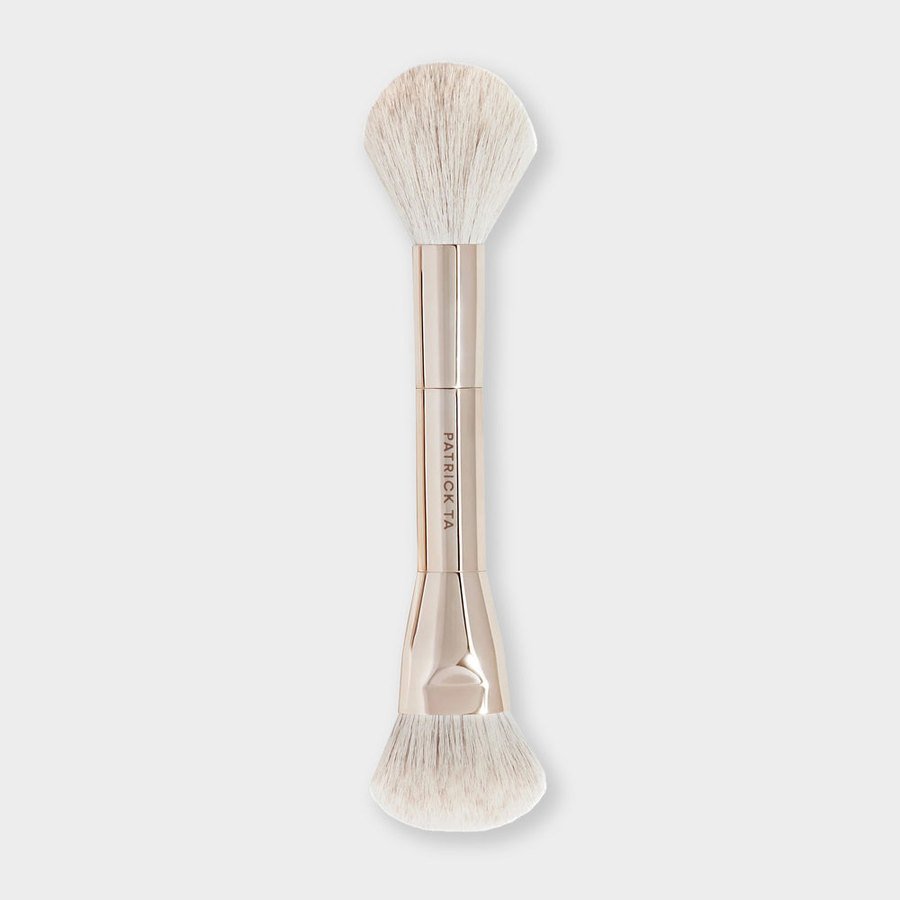
Dual-Ended Blush Brush
A dense end for pressing crème and a fluffy end for dusting powder, so the two steps use two heads without a wash in between. $46.
None of the three makes cream blush permanent. What they do is move the point where it starts to fade from early afternoon to the end of the evening, and they only do that if the crme goes on first and the powder goes on light. If blush is one step of a longer getting-ready sequence, the same press-not-drag care applies to lash clusters, and the same timing logic to the subtle enhancements people book before a big day.
FAQ
How do you apply cream blush on mature skin?
Place it higher on the cheekbone than the apple, press rather than drag, and lock it with a very light satin powder instead of a heavy matte one. Cream generally suits mature skin better than powder because it does not settle into lines, but the powder layer has to be nearly weightless.
What are the most common cream blush mistakes?
Applying it over powder, using too much, dragging instead of pressing, setting it with heavy powder, and skipping the powder lock and then touching the face all day. The crème-then-light-powder method removes all but the second, which warming a small amount on your hand fixes.
What is the best applicator for cream blush?
A dense, flat-topped brush for the cream and a separate fluffy brush for the powder layer. Fingers work for a sheer wash but leave it patchy, and a sponge absorbs the product and lifts foundation. A dual-ended brush with one head per texture covers both steps.
Is cream blusher better for older skin?
Yes, in most cases. Cream adds back the surface sheen skin loses with age and does not sink into fine lines the way powder does. The trade-off is that it fades faster, which the powder-lock step solves without giving up the finish.
How do you apply cream blush without rubbing off foundation?
Let the foundation set for sixty to ninety seconds first, warm the blush on your hand, and stamp it on with pressing motions instead of sweeping. Dragging a brush or finger across foundation that has not set is what lifts it; pressing does not.